Thursday, November 8, 2012

7 Health Problems Your Dentist Can Spot

Open wide! Your mouth can reveal a lot about your health — from heart problems to bone disease to dementia.

Ouch — no one likes to get bad news in the dentist’s chair. But good dental health is a reflection of good health overall — and how well you take care of your teeth may reflect how well you take care of the rest of your body. That’s why your dentist can tell you a lot more about your health than simply the state of your mouth. A routine dental exam may reveal problems with your bones, heart, or digestion because certain warning signs live inside your mouth.

And not only can routine dental check-ups reveal certain health problems, they may also prevent them. In fact, a new study presented at the annual meeting of the American Heart Association found that people who received regular teeth cleanings and scrapings had a 24 percent lower risk of heart attack and 13 percent lower risk of stroke compared to people who didn’t get such dental care.

1. DEMENTIA
Poor oral hygiene may even be a risk factor for dementia, according to a recent study published in the Journal of the American Geriatric Society. Scientists at the University of California followed more than 5,000 elderly people over 18 years and found that those who brushed their teeth less than once a day were up to 65 percent more likely to develop dementia than those who brushed daily. The researchers speculate that this is because gum disease bacteria might get into the brain and cause inflammation.

2.  HEART PROBLEMS
Research has found a surprising number of links between the state of your dental health and your heart. Inflamed gums and loose teeth can be warnings of heart disease. If you have a gum disease like periodontitis, the bacteria in your gums could travel to your heart and contribute to coronary artery disease. Bacteria may also increase your risk for heart disease by contributing to the formation of clots or further plaque build-up in your arteries that can interfere with blood flow to the heart. 


3. DIABETES
The most common dental health condition for diabetics? Gum disease. "Gum disease, bleeding gums, and loose teeth are all warning signs of diabetes," Dr. Koslow says. "Diabetics also tend to have a slower healing time." Infections at your gum line can worsen the state of your diabetes and can contribute to the risk for heart disease and stroke, so it’s important to take steps to keep your mouth healthy (and your diabetes under control). 

4. OSTEOPOROSIS
"Osteoporosis does not cause changes in the teeth, but it does cause changes in the bone that supports the teeth," Koslow explains. "This may show up as a receding gum line and loose teeth." 

5. EATING DISORDERS
Eating disorders can cause poor nutrition, which can lead to oral conditions like bleeding gums and dry mouth. In addition, "erosion on the insides of the front teeth may be a sign of forced vomiting in a young person with bulimia — stomach acid wears away at enamel and also makes teeth more sensitive," says Koslow.

6. NIGHTTIME REFLUX
"Erosion of enamel from the insides of teeth, especially the upper back molars, is a clue to gastroesophageal reflux disease (GERD)," Koslow says. Reflux of stomach juices can happen at night --- but you may not be aware of it until your dentist sees its effects on your dental health.

7. DRY MOUTH 
Saliva helps to wash away bacteria and debris that lead to cavities and gum disease.  if you’re producing too little saliva, your dentist will know. Dry mouth may be caused by medications or it may be a sign of a disease such as diabetes or Parkinson's disease. The solution? Up your fluid intake, and your dentist may even suggest a saliva substitute. 


To learn more on each of these topics, read more from the original source here.

Monday, October 29, 2012

HALLOWEEN!

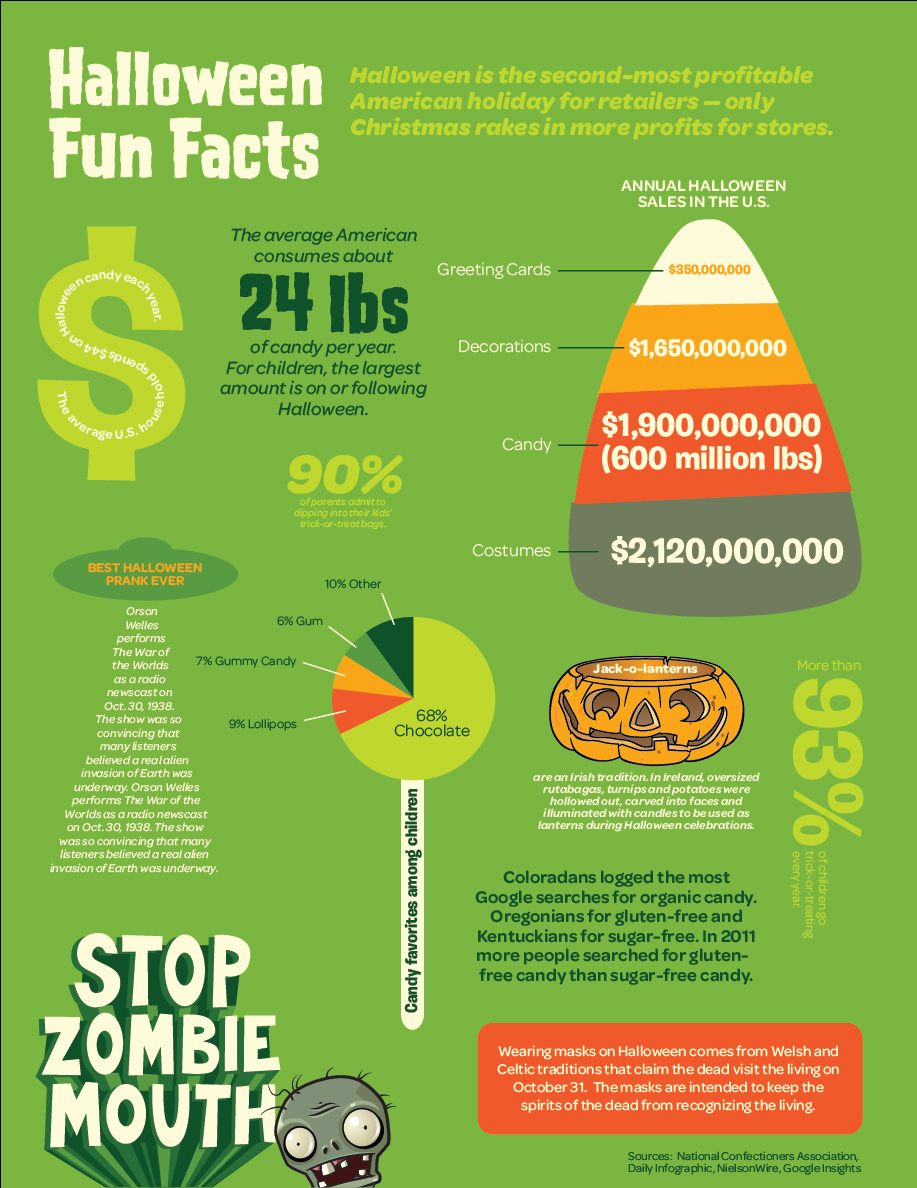
A new survey targeting 5- to 13-year-olds found 94 percent of them trick-or-treat and 65 percent of them consider Halloween the best holiday of the year. Yet two thirds of the respondents agreed that they eat too much candy around that final day of October. Even most of us in the dental profession admit to enjoying a few too many sweet treats during the end of the year holidays. The good news? You can pay attention to dental care for children (and yourself!) without giving out pencils and toothbrushes on Halloween. 

Tips-N-Treats

  • Not all candy is created equal. 
    • Avoid: Taffy, caramels, gummy bears; anything that is sticky, chewy or sour 
      • Sticky: sticks to the teeth longer 
      • Sour: High acid content that can erode tooth enamel
  • What's a "non-candy" treat that kids still love?
    • Sugar-free gum!  It stimulates saliva flow and removes debris off the teeth. 
    • Stickers!
    • Fun bracelets!
    • Glow jewelry - helpful on Halloween night, too! 
  • What's the best kind of candy to give out from a dentist's point of view?
    • Any candy that's small - and preferably not on the "avoid" list above. Think CHOCOLATE!
  • What type of treat is a dentist's worst nightmare?
    • We are most concerned about the type of sugar. Sticky and long-lasting candy, like caramels or suckers, are going to linger on your teeth after finishing them and be a problem. The stickier the candy and the longer the candy remains in the mouth, the worse it is. 
  • What's the best kind of candy to give out?
    • Chocolate! Chocolate clears out of the mouth quickly. (Not chocolate with caramel...)
    • Non-chocolate option: Small packs of sugar-free gum! 
  • Other Must-Knows
    • The average child receives 90 pieces of  candy on Halloween. Limit the # of pieces and times of day your children can enjoy some of their candy. 
    • You can bring your candy in to our Sweet Swap! Trade your candy in for gift cards or cash! 
See our Dentist's Guide to Halloween 2011 from last year for more great tips! 


More great resources: StopZombieMouth.com, SmilesNY.com, PopCap.com

Wednesday, October 3, 2012

National Dental Hygiene Month


National Dental Hygiene Month

This year's theme, “Keep them healthy. Keep them clean.” continues to stress easy ways that our patients can incorporate a simple oral health regimen into an active and busy life in order to maintain optimal oral health.


How can you KEEP THEM HEALTHY. KEEP THEM CLEAN?


BRUSH 2 min 2x a day
Brushing your teeth for two minutes at least twice a day remains a critical component to maintaining a healthy smile. Studies have shown that brushing for two minutes is perhaps the single most important step an individual can take to reduce plaque build-up and the risk of plaque-associated diseases, such as cavities and gingivitis.Proper brushing is essential for cleaning teeth and gums effectively.

FLOSS daily
Proper flossing or interdental cleaning removes plaque and food particles in places where a toothbrush cannot easily reach — under the gumline and between your teeth. Because plaque build-up can lead to tooth decay and gum disease, daily flossing is highly recommended.

RINSE with mouthwash
Rinsing your mouth each day with an anti-microbial mouth rinse is another important step in preventing the gum disease known as gingivitis. Speak with your dental hygienist for more information on which mouth rinse is right for you.

CHEW sugar-free gum after eating
Chewing sugar-free gum after eating is clinically proven to be an important part of good oral health. It stimulates the most important natural defense against tooth decay - saliva - which, in turn helps fight cavities, neutralize plaque acids, remineralize enamel to strengthen teeth and wash away food particles.